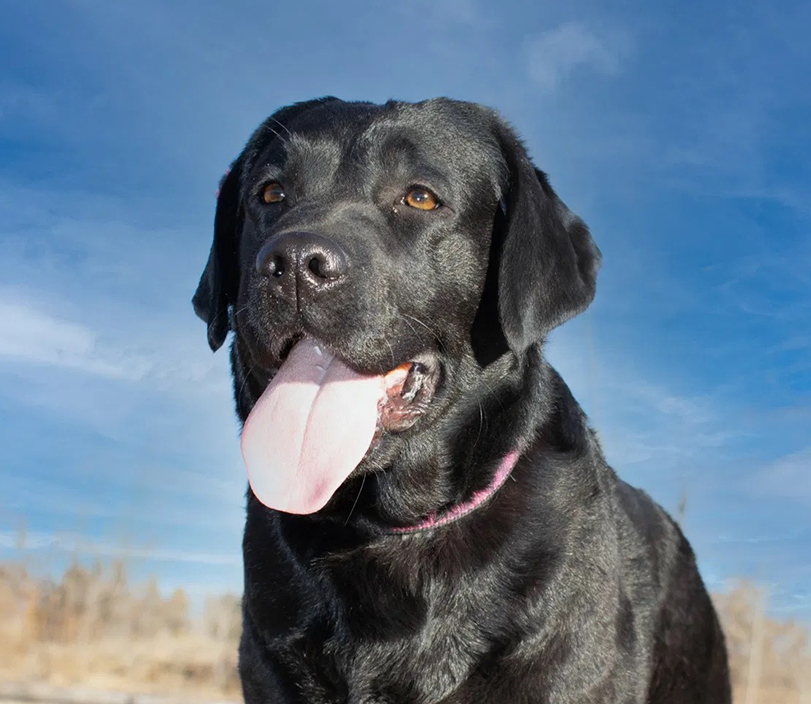
English Labrador vs American Labrador
One breed. Two directions of breeding. And most Labradors somewhere in between.
Why the labels exist at all
Labradors have been bred for two quite different purposes. Some lines were selected for the show ring and for companionship — heavier bone, a broader skull, a calmer engine. Others were selected for fieldwork — lighter frame, more stamina, more drive to keep going all afternoon.
People needed shorthand for that difference, and “English” and “American” is what stuck. It isn’t a great shorthand. Plenty of blocky, calm Labradors are born in Kentucky, and plenty of lean, driven ones in Yorkshire. The labels describe the type of breeding program, not the passport.
What the genetics actually show
This is the part most articles get wrong in one direction or the other — either insisting the two are identical, or implying they’re practically different breeds. The research says something more interesting than both.
A large genomic study of Labrador Retrievers found that the breed does separate into two closely related populations, and the split lines up with the dog’s job: field and working lines on one side, show and conformation lines on the other. The regions of the genome that differ most contained genes associated with skull shape — which is precisely the blocky head people are pointing at when they say “English.”
But the finding that matters most for anyone choosing a puppy: the pet dogs in the study were a mixture of both. They didn’t sort neatly into either group. That is the honest picture of the breed — not two boxes, but a range, with most family Labradors somewhere along it.
Source: Genomic data illuminates demography, genetic structure and selection of a popular dog breed, BMC Genomics.
What each end was bred for
The English end
Bred for the ring and the home- Broad skull, short muzzle, heavier bone
- Shorter-coupled, thicker through the body
- Calmer baseline; settles readily indoors
- Moderate daily exercise; gains weight easily
- Continues thickening until 12–18 months
The American end
Bred for the field- Finer head, longer muzzle, lighter bone
- Taller, leaner, longer through the leg
- High drive; needs a job to be content
- Substantial daily exercise and stimulation
- Excels at hunting, field trials, agility
Neither end is better bred or healthier than the other. Hip and elbow dysplasia, eye conditions and exercise-induced collapse occur across the whole breed. What protects a puppy isn’t which end it came from — it’s whether the breeder tested the parents, understood the pedigree, and paid attention to inbreeding coefficients.
How the two ends came about
The breed began in Newfoundland in the 1800s, working alongside fishermen — hauling nets and retrieving fish that slipped the lines. Those dogs were brought to England in the early nineteenth century, where the Labrador Retriever was refined into the breed we know.
From there the paths split. British breeders, working with an established show culture, selected for conformation and an even temperament, producing heavier, calmer dogs. American breeders leaned into the retrieving work itself — waterfowl hunting and field trials — favoring speed, stamina and drive. Same breed, same origin, two sets of priorities applied for the better part of a century.
Which end suits your home
Be honest about your week, not your aspirations. The question isn’t which dog is better; it’s how much dog your daily life can absorb.
A field-bred Labrador in a house with no job to do is not a calm dog with a secret — it’s a frustrated athlete, and that usually shows up as chewing, pacing and noise. Equally, a heavier show-bred Labrador expected to run trails every day may struggle, and will put on weight the moment you ease off.
If you want a dog that hikes with you and then genuinely settles on the kitchen floor, you’re looking toward the English end. If you want a running partner, a hunting dog, or a candidate for serious sport, look toward the field end. And if you want something in between, that’s most of the breed — you just want a breeder who can tell you honestly where their dogs sit.
Where our dogs sit
Kindred Pup breeds toward the English end: thick, blocky, short-coupled dogs with the calmer temperament that end is known for. That’s a deliberate choice, because most of the families who come to us want a dog that fits into ordinary home life rather than one that needs a job.
It isn’t the only good kind of Labrador. If you’re after a field dog, we’d rather point you to someone who breeds them well than sell you the wrong pup.
Common questions
Are English Labradors healthier than American Labradors?
No. Both sit in the same gene pool and face the same risks — hip and elbow dysplasia, eye conditions, and others. Health comes from the breeding decisions, not the label: tested parents, known pedigrees, sensible inbreeding coefficients.
Do English Labs need less exercise?
Somewhat less, but not little. They still need daily activity, and because the calmer dogs move less on their own, weight becomes the thing to watch. A heavy Labrador is a shorter-lived Labrador.
Can you tell from a puppy which type it is?
Not reliably. Puppies of both types look round and soft at eight weeks. The build declares itself over the first year — English-type dogs keep thickening until around 12 to 18 months. The pedigree tells you far more than the puppy does.
Is one of them “purebred” and the other not?
Both are purebred Labrador Retrievers. Neither is a cross, a variety, or a separate registration. A dog from either end can be registered with the AKC or the Kennel Club as simply a Labrador Retriever.
Which one is the “real” Labrador?
Both, equally. The original Newfoundland dogs were working retrievers, so the field lines have a fair claim to continuity — but the breed as it’s now defined was shaped in England. Neither end is a departure from the breed; they’re two answers to the question of what a Labrador is for.